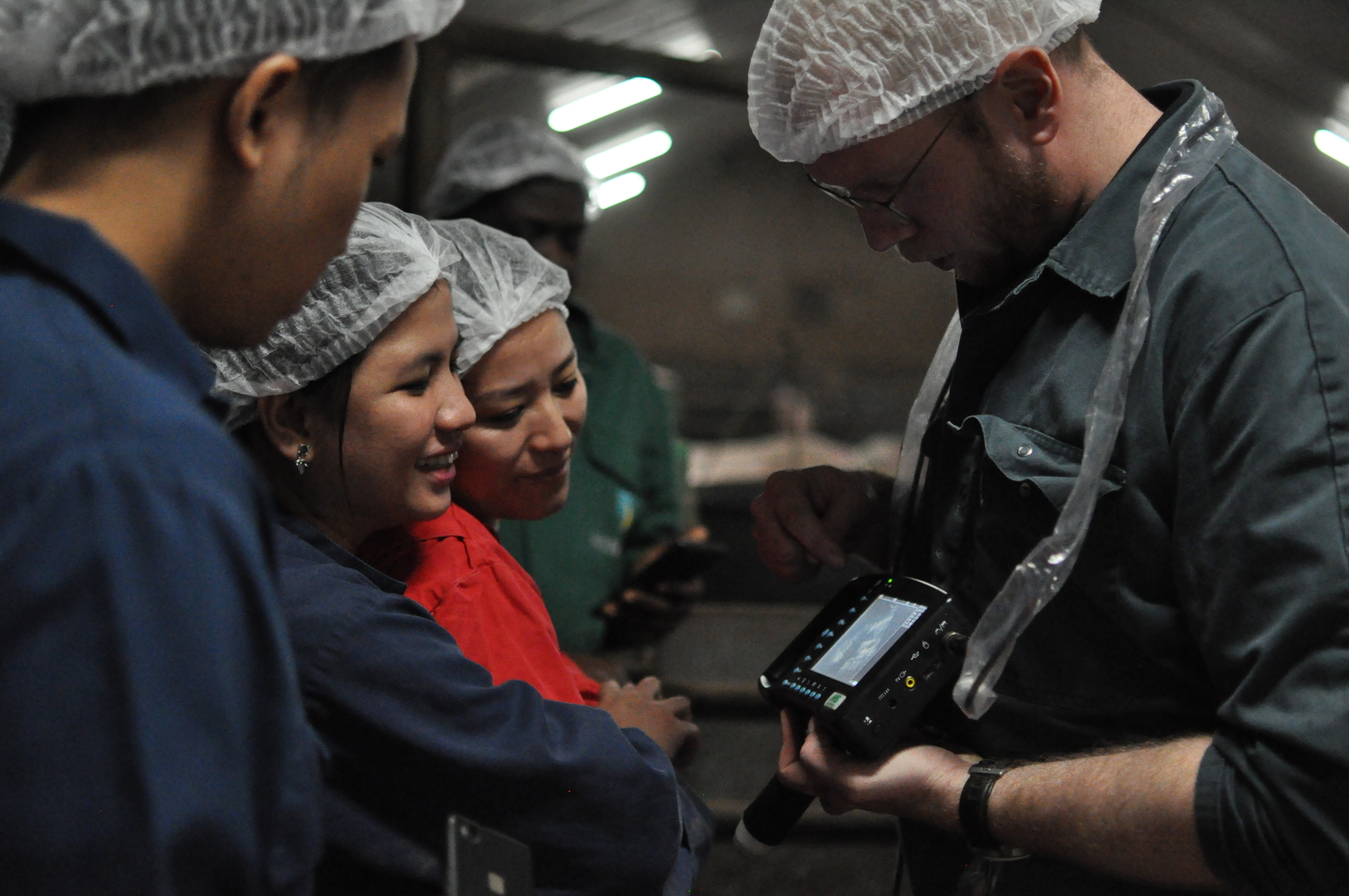
Originally from the Philippines, she studied Animal Science at the University of the Philippines and later worked at the International Training Center on Pig Husbandry. Between 2013 and 2020, she trained professionals in pig production and also worked as an assistant farm manager.
Today, Jenny lives in Canada, where she manages an R&D pig barn and works as a swine reproductive specialist.
The countries and roles have changed, but one thing has remained constant: her drive to understand how things work and translate that knowledge into practice.
Looking for knowledge she could bring back home
Jenny first heard about Aeres Training Centre through senior colleagues in the Philippines who had previously studied in the Netherlands. She saw how they returned with new expertise and ideas that could strengthen their work.
“At that time, I was looking for ways to upgrade and update the training programmes we offered to our clients in the Philippines,” she says.
Because the training centre worked with participants from both government organisations and private companies throughout the country, new knowledge could potentially reach a large group of professionals.
Jenny was particularly interested in the practical learning approach. “I knew that Aeres could provide the knowledge and skills within the timeframe of the programme through the learning-by-doing principle.” She followed an international programme in Pig Husbandry and Animal Feed Milling, combining theoretical knowledge with practical experience throughout the different
Understanding not only what to do, but why
For Jenny, learning by doing is much more than simply adding practical exercises to a lesson.
“When you do something yourself, it becomes part of you,” she explains. “It becomes muscle memory. From there, you can continue to improve.`
The balance between theory and practice gave her time to understand the principles behind pig production and then experience them in a practical setting.
That also influenced the way she thought about her own role as a trainer. “The trainers were very knowledgeable in their specialisations. I learned a lot from the ‘why’. They explained the theory behind something instead of only teaching us what to do and how to do it.”
That deeper understanding made a difference. “After my studies at Aeres, I became more confident.”
Reproduction knowledge she still uses today
One subject in particular became important throughout Jenny’s career: swine reproduction.
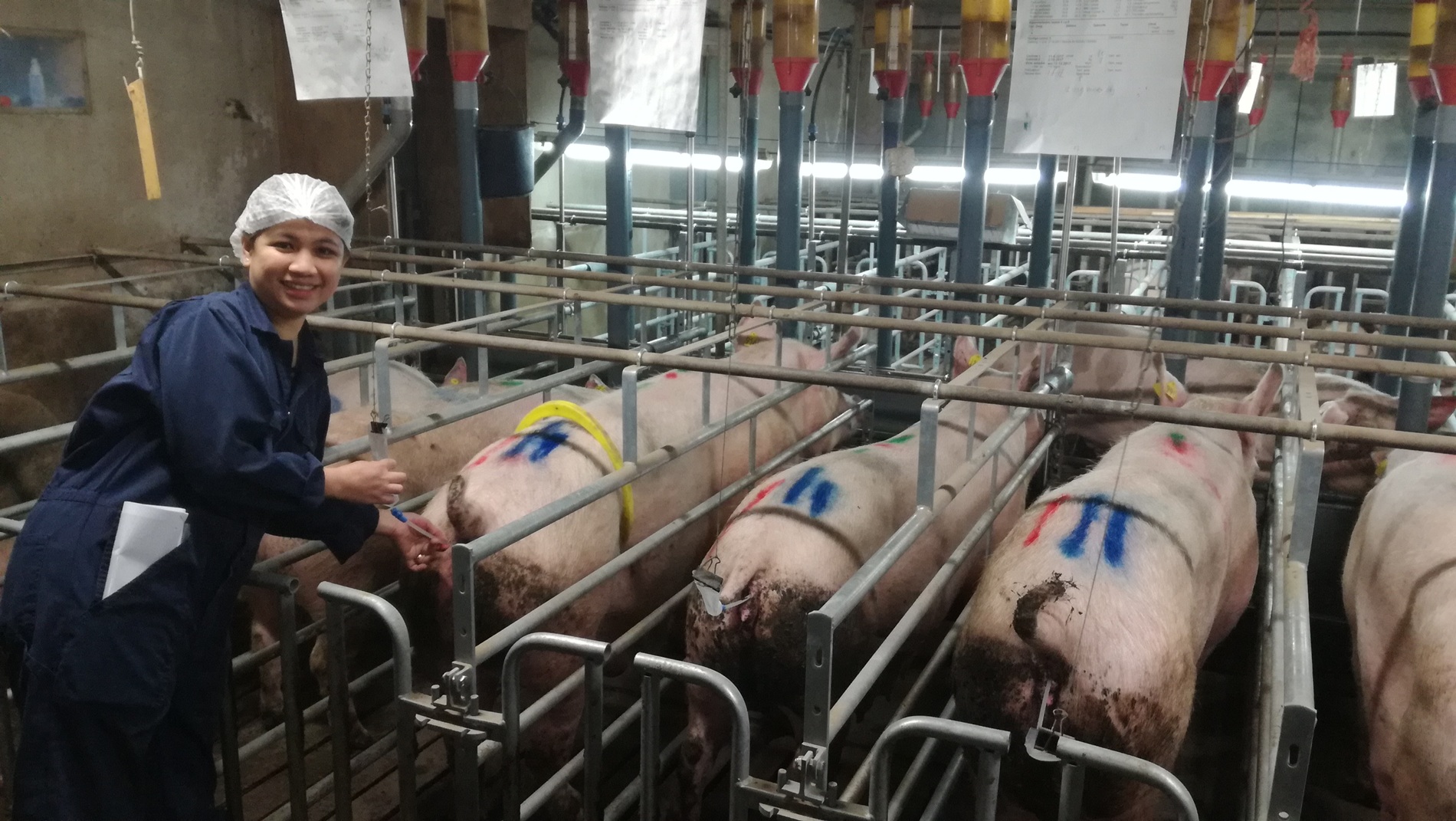
During the breeding module, participants studied the relationship between ovulation and the correct timing of artificial insemination in gilts and sows.
It quickly became one of Jenny’s favourite subjects. “We learned how to explain the right timing of insemination by understanding the principle of ovulation. It became one of my favourite topics to teach when I returned home.”
She incorporated what she had learned into the artificial insemination training offered by her organisation in the Philippines. Years later, the same knowledge is still relevant. “Even in my current job in R&D, I apply this principle, especially because we work with an estrus synchronisation programme.”
Her experience demonstrates how understanding the principles behind a technique can make knowledge transferable. A production system, organisation or country may change, but the underlying biological knowledge remains relevant.
Bringing new knowledge into the training centre
When Jenny returned to the Philippines, she had the opportunity to pass on what she had learned.
She reviewed the organisation’s swine artificial insemination module and incorporated new knowledge from her studies in the Netherlands.
Feed milling also became an important area. “For me, it was the first time I experienced both the technical and practical side of feed milling.”
That experience had an impact beyond her own professional development. At the time, her training centre was able to resume training activities in feed milling using knowledge gained during the programme.
The organisation also continued to update its curriculum as developments in pig production and technology changed.
Jenny saw the results directly in the classroom. “Our participants gave us positive feedback about receiving updated knowledge and learning about new approaches.”
Her work as a trainer was recognised as well. During her time at the training centre, she received company awards including recognition as a best resource speaker and trainer.
Practical facilities that support the learning process
For Jenny, practical learning also depended on having access to an environment where participants could experience different stages of production.
The pig farm used during the programme operated from farrowing through to finishing. “That meant we could see the different stages of production that we needed to understand.”
The feed mill offered a different kind of learning experience. Although animal nutrition was connected to her professional background, the technical production process itself was new to her.
Being able to experience both areas helped her connect individual subjects to the wider production process. It is that combination of theory, facilities and practical assignments that made learning by doing valuable to her.
Learning from people as well as the programme
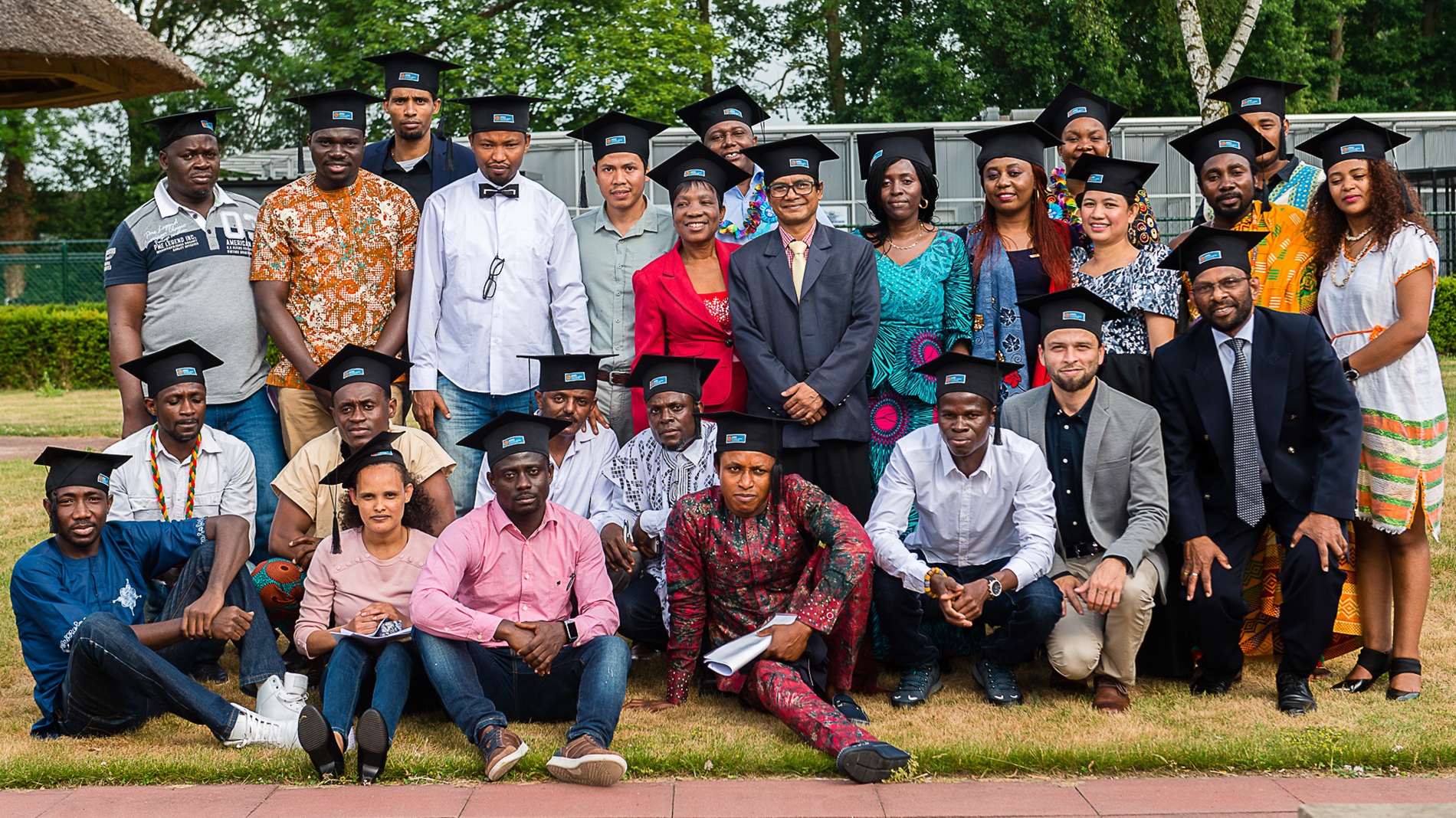
The programme was also Jenny’s first experience studying and living abroad. “It was my first international travel and my first experience living outside my country to study. I was in awe of the place and the culture. It broadened my horizons.”
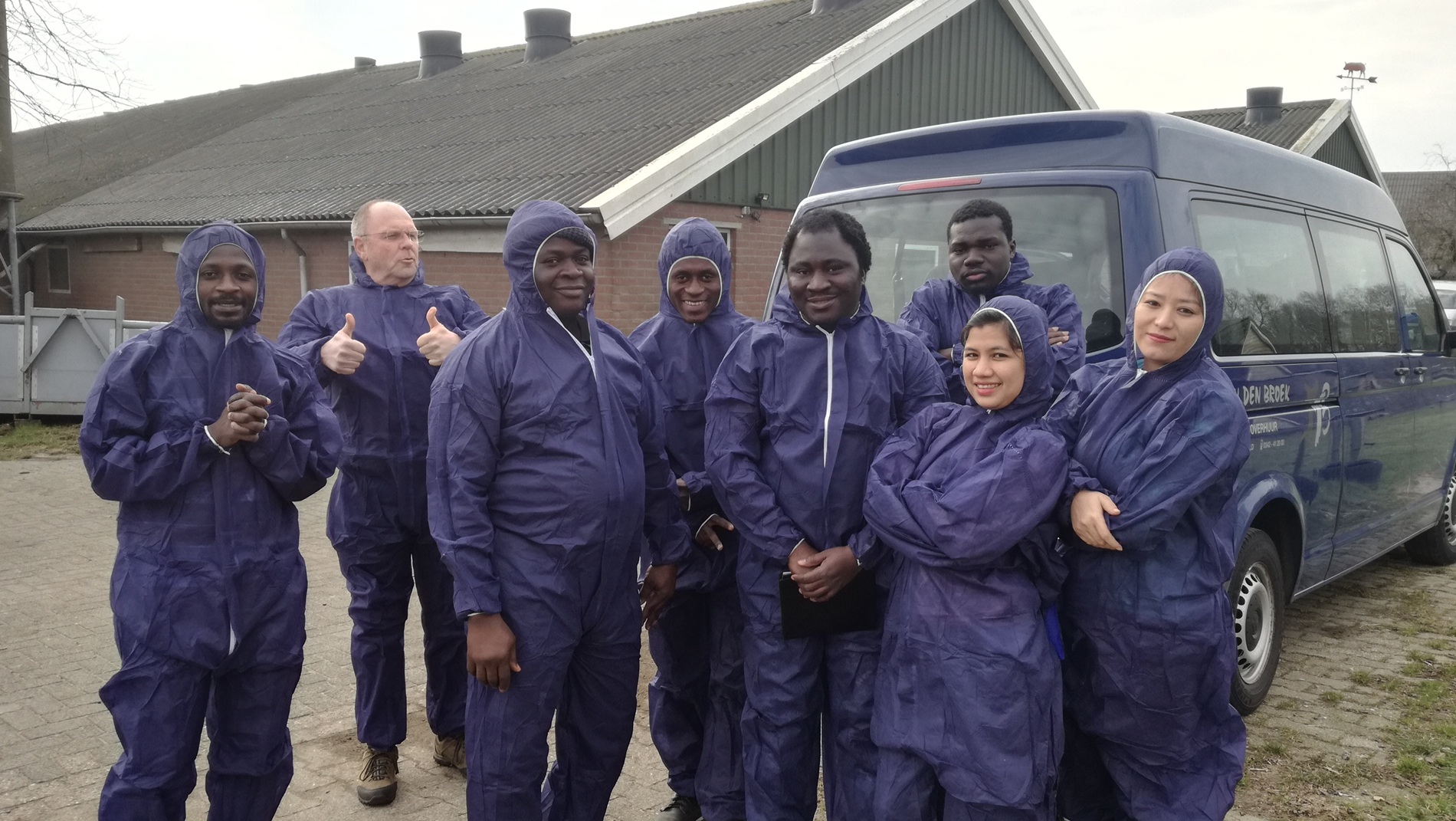
Studying with professionals from other countries was sometimes challenging. Different personalities, professional backgrounds and ways of communicating all came together in one group.
But those differences became part of the learning experience too. Jenny still remembers the people she met in the Netherlands – from international classmates to local people who helped her when she first arrived with two large suitcases and was trying to find her way from the airport and train stations.
She also appreciated elements of the Dutch professional culture. “The approach is straightforward. People explain things clearly, think ahead when dealing with challenges and make strong use of technology.”
For Jenny, the international experience therefore extended beyond pig production alone. It influenced how she looked at education, agriculture and professional collaboration.
From training professionals to working in R&D
Jenny eventually moved from the Philippines to Canada, where her career developed in a new direction. Today, she works within a genetic nucleus company, managing an R&D pig barn and specialising in swine reproduction.
Her current role involves a different working environment, but the knowledge and confidence she developed earlier in her career continue to be relevant. “I am now working in R&D, and Aeres had a lot of influence on what I can bring to my current organisation.”
Research and development continually presents new questions and possibilities. “There are still so many areas in R&D to explore. But everything I have learned has made me capable of saying: I can.”
That confidence may be one of the most lasting outcomes of her professional development.